
1.Red Fort (Lal Qila): A 17th-century Mughal fortress with massive red sandstone walls.
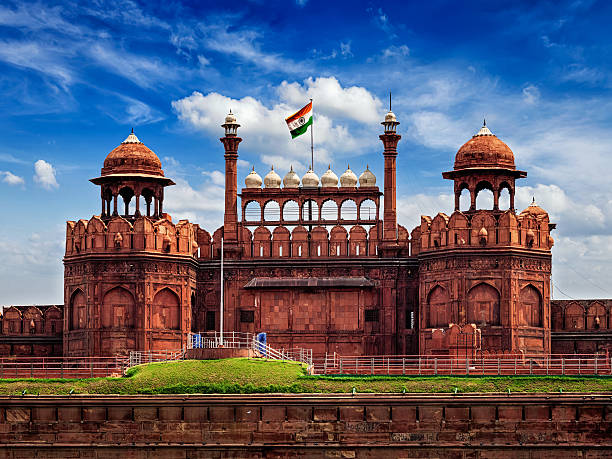
The Red Fort (Lal Qila in Hindi; Hindi pronunciation: [laːl ‘qɪlaː]) is a historic Mughal fort located in the Old Delhi area of Delhi, India. Serving as the main residence of the Mughal emperors, it was commissioned by Emperor Shah Jahan on the 12th of May 1639; the fort was constructed following his decision to shift the Mughal capital from Agra to Delhi. Originally adorned in red and white, the fort’s design is attributed to Ustad Ahmad Lahori, the architect of the Taj Mahal. The Red Fort is a prominent example of Mughal architecture from Shah Jahan’s reign, combining Persian and Indian architectural styles.
2.Qutub Minar: A UNESCO World Heritage site and the world’s tallest brick minaret.
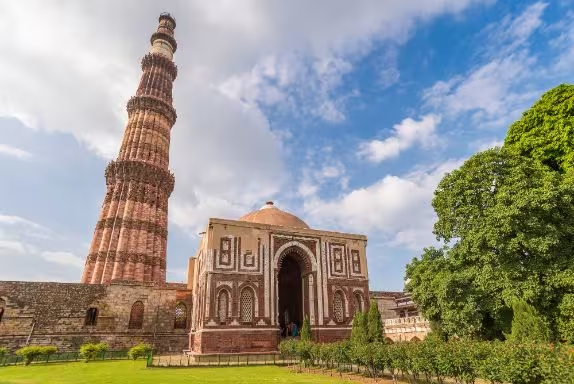
Towering 73 metres high above the greens in Mehrauli, construction for this five-storey minaret was started by Qutb ud Din Aibak, founder of Delhi Sultanate. It is renowned for the artistic brick-work on its pillars and arches.
3.India Gate: A war memorial arch built in honor of Indian soldiers.
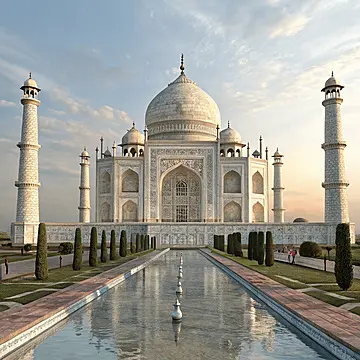
The Taj Mahal is an ivory-white marble mausoleum on the right bank of the river Yamuna in Agra, Uttar Pradesh, India. It was commissioned in 1631 by the fifth Mughal emperor, Shah Jahan, to house the tomb of his late wife, Mumtaz Mahal; it also houses the tomb of Shah Jahan himself.
4.Akshardham Temple: A massive, intricately carved temple complex Viator.
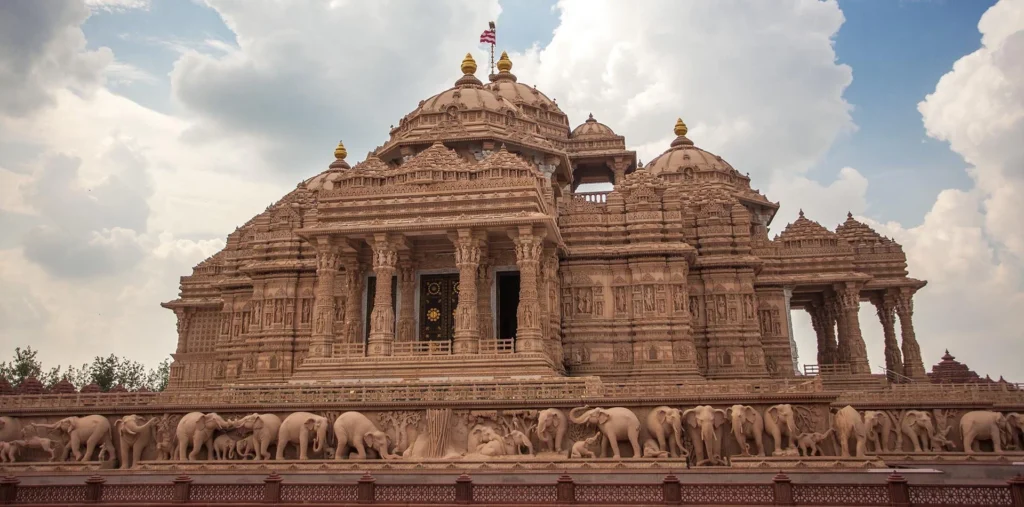
The temple was opened on 6 November 2005 by Pramukh Swami Maharaj in the presence of A. P. J. Abdul Kalam, Manmohan Singh, L.K Advani and B.L Joshi.[B 2][B 3] The temple, at the centre of the complex, was built according to the Vastu shastra and Pancharatra shastra
5.Humayun’s Tomb: The magnificent predecessor to the Taj Mahal and a UNESCO World Heritage site.
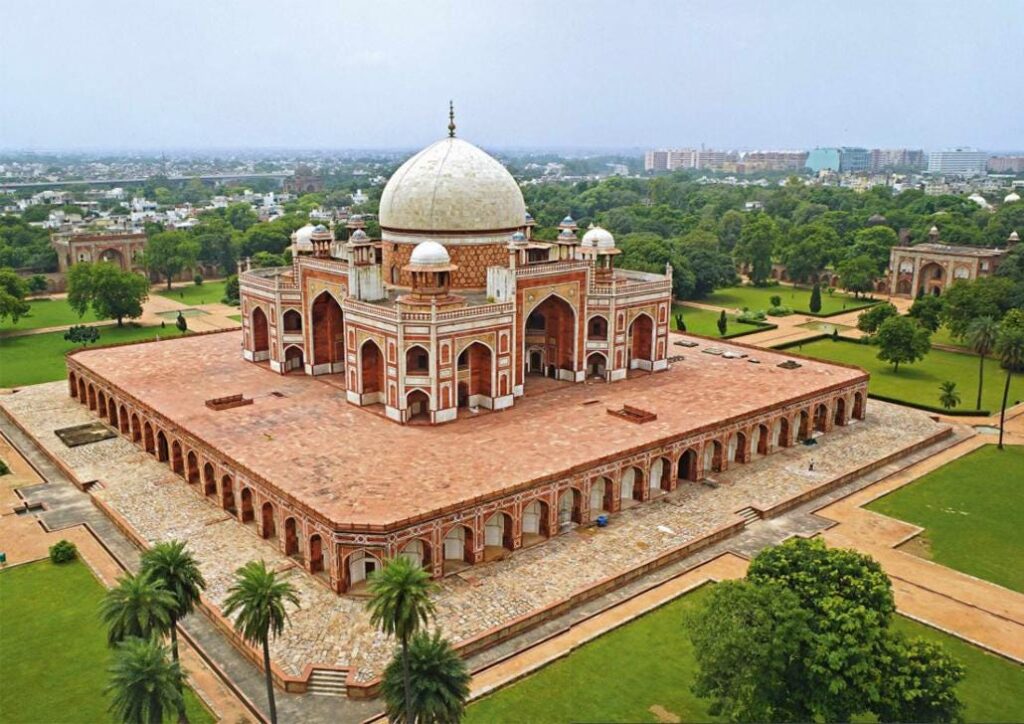
Humayun’s tomb (Persian: Maqbara-i Humayun) is the tomb of the Mughal Emperor Humayun located in Delhi, India.[1] The tomb was commissioned by Humayun’s first wife and chief consort, Empress Bega Begum, under her patronage[2][3][4][5][6] in 1558, and designed by Persian architects Mirak Mirza Ghiyas and his son, Sayyid Muhammad,[7] whom she personally chose.[8][9] It was the first garden-tomb on the Indian subcontinent,[10] and is located in Nizamuddin East, Delhi, close to the Dina-panah Citadel, also known as Purana Qila (Old Fort), that Humayun found in 1538. It was also the first structure to use red sandstone at such a scale